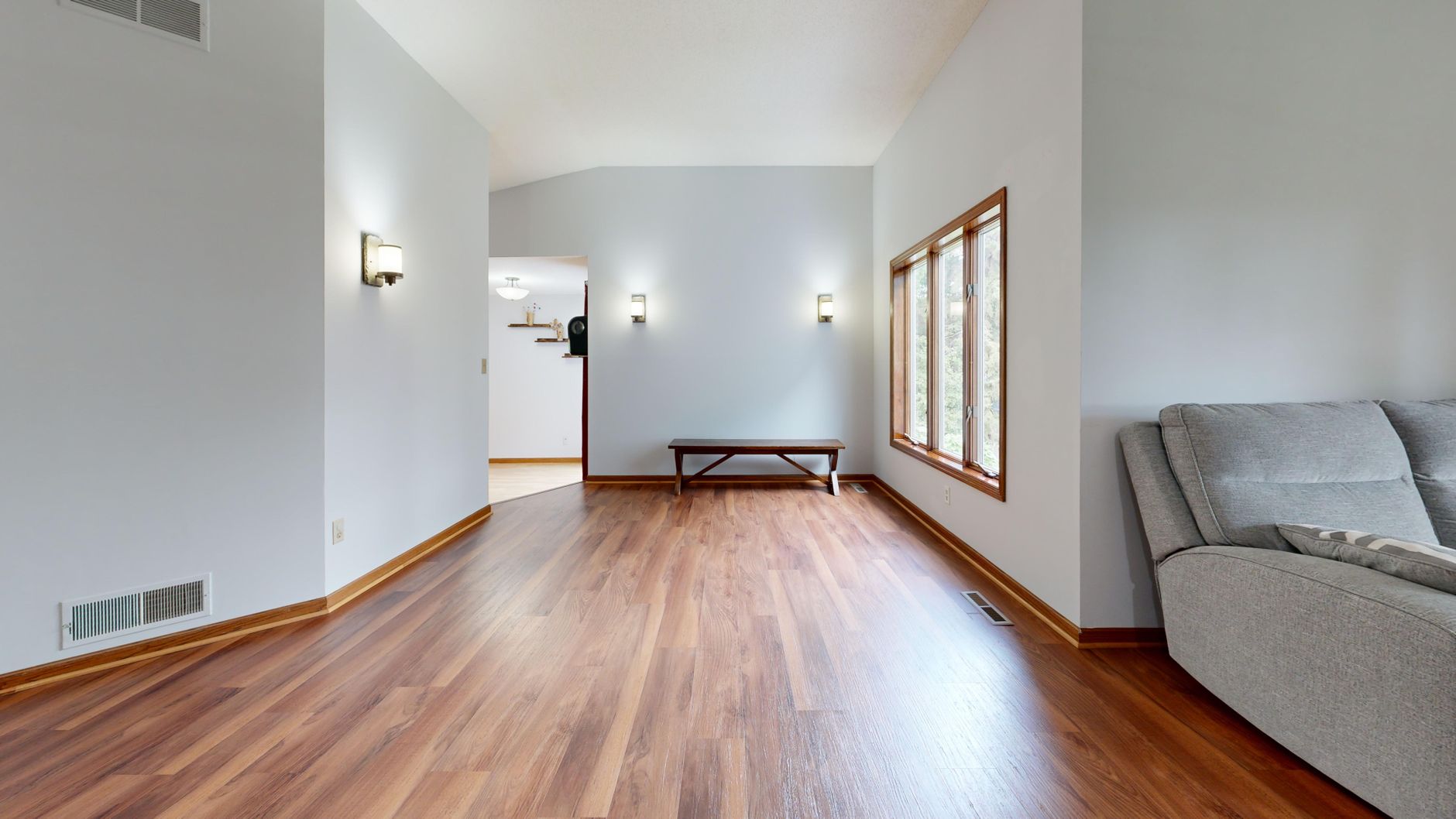
Hardwood at Altitude: Why Colorado Floors Gap, and What Prevents It
Colorado's flooring problem is the opposite of most of the country's. Here the air is dry enough, for long enough, that wood gives up moisture and shrinks — so the failure mode is gapping and cracking rather than swelling and buckling.
What the dry air actually does
Wood is hygroscopic: it takes moisture from the air and gives it back, and it changes size doing
it. Colorado averages around 30% relative humidity year-round, and once the heating comes on, indoor
air routinely drops below 20%. Every board on the floor gives up moisture and shrinks across its
width. Multiply a fraction of a millimetre by every board in a room and you get visible gaps.
That is why a floor that was fine in Ohio can fail in Colorado with identical materials and an
identical crew. The material did not change. The air did.
The three numbers that decide the job
- Moisture content at installation: roughly 6–9%. At lower elevations and on
humid coasts the target is 10–13%. A crew working to a national spec sheet installs a floor that is
too wet for this climate, and it shrinks into gaps over the first heating season. Ask what they are
targeting and what they measured — a meter reading takes seconds. - Acclimation: 7–14 days, against an industry standard of 3–5. The material has
to sit in the room it is going into, at the humidity that room actually runs. This is the cheapest
insurance on the whole job and the first thing compressed when a schedule slips. - Indoor humidity afterwards: 30–40%. This is the homeowner’s part. Below that
range the floor keeps shrinking no matter how well it was installed.
What this changes about material choice
Engineered wood has a real technical advantage here, not just a sales one. Its
cross-laminated core moves less across a large humidity swing than solid wood does, and a Colorado
year delivers exactly that swing. Solid hardwood still works and still sands more times over its
life — it simply demands tighter humidity control to stay flat.
Narrower boards also move less visibly than wide plank: the same percentage change
spread across more seams shows up as many small gaps rather than a few obvious ones.
Reading your own floor
- Seasonal gaps that open in winter and close in summer are normal movement, not
a defect. - Gaps that never close suggest the boards went down too wet.
- Cupping — edges higher than the middle — means moisture is arriving from
underneath, which is a slab or crawlspace problem rather than a floor problem. - Cracks through the face of boards, rather than gaps between them, are a sign of
sustained very low humidity.
Common questions
Is a whole-house humidifier worth it?
In Colorado, for a wood floor, usually yes. Holding 30–40% through the heating season is what
keeps seasonal movement from becoming permanent damage.
Should I install in summer instead?
What matters is that the material is acclimated to the conditions the house actually runs at
year-round, not the month on the calendar.
Does this apply to vinyl plank and tile?
No, and that is a genuine argument for them here. Neither is hygroscopic, so neither cares about
the humidity swing that moves every wood floor in the state.