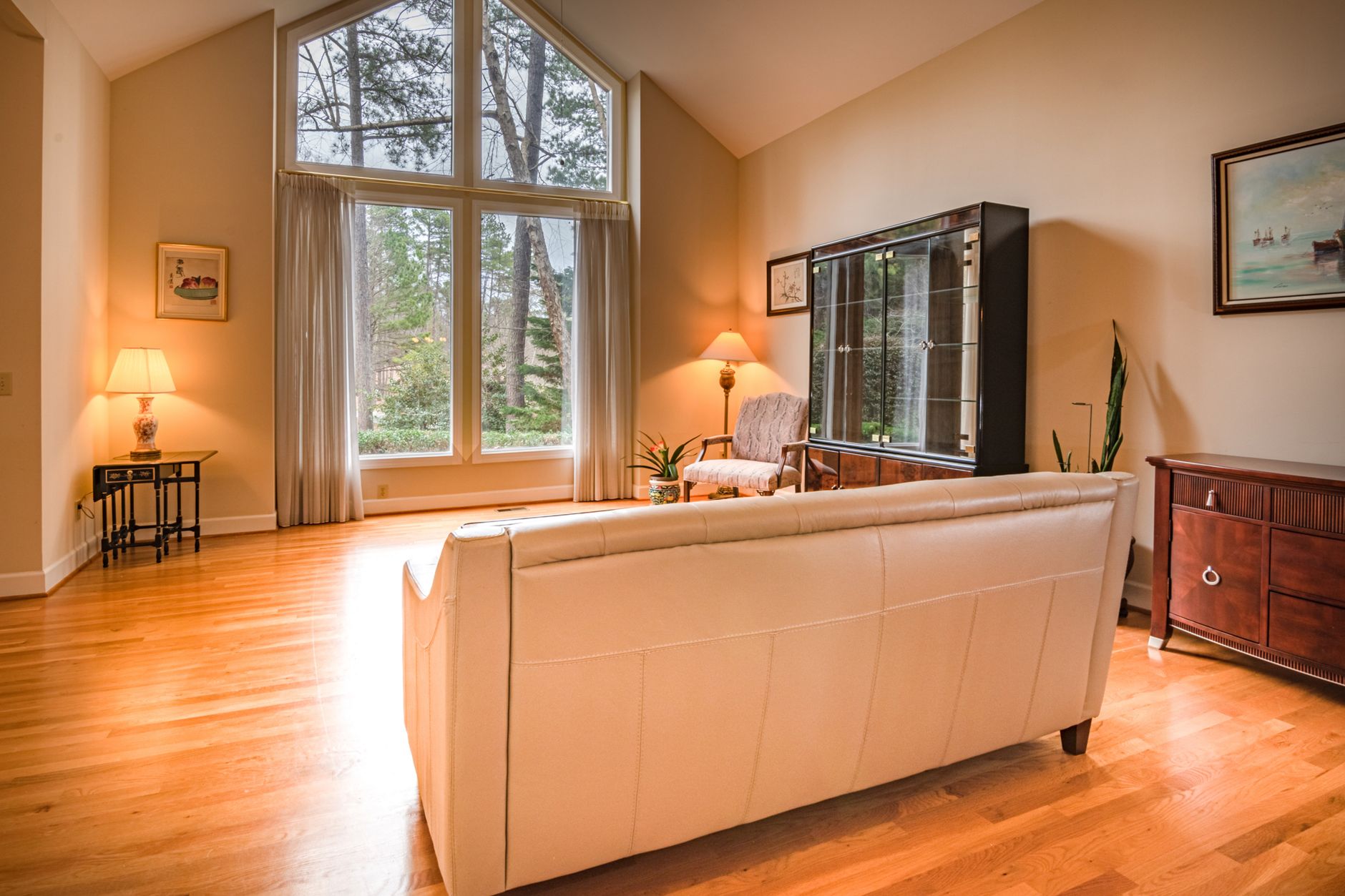
Hardwood needs 7-14 days to acclimate in most of Colorado because the state’s low humidity and altitude pull moisture out of wood faster and more completely than the sea-level conditions national flooring guides are written for. The extra time lets the wood settle near the home’s actual indoor moisture level before it gets nailed or glued down.
What does “acclimation” actually mean for hardwood flooring?
Acclimation is the period where new hardwood sits inside the house, in the room it will be installed, so its moisture content can adjust to match the surrounding air. Wood is hygroscopic — it gains or loses moisture until it reaches equilibrium with the room. Installing it before that happens is what causes gapping and cupping later.
Manufacturers set a target moisture content range, typically 6-9% for most of Colorado’s climate zones, and expect the flooring to sit on-site, out of its plastic wrap but still banded, resting on stickers for airflow, until a moisture meter confirms it is close to that number and close to the subfloor’s reading.
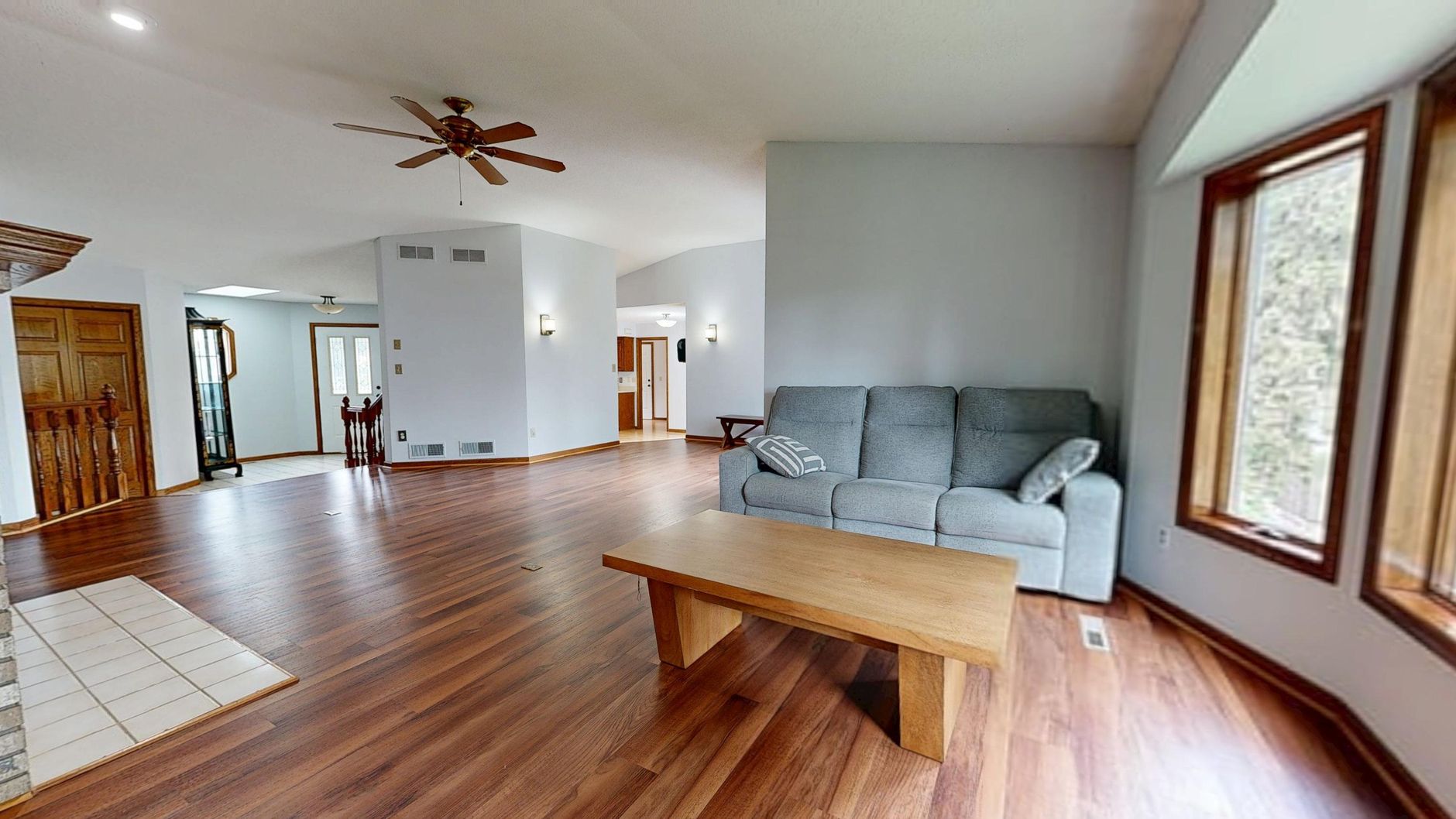
Why does Colorado’s altitude and dry air stretch the timeline?
National packaging often lists 3-5 days because it is written for humid, lower-elevation climates where indoor air holds more moisture and wood doesn’t have as far to travel. Along Colorado’s Front Range, winter indoor relative humidity commonly falls under 20%, and wood shipped in from a humid mill or warehouse can arrive well above the target moisture content.
Moving from, say, 11-12% moisture content down to 6-9% takes longer than moving a point or two. At elevation, the air itself holds less absolute moisture even before a furnace runs, and heating season strips out what little humidity is left. Wood loses moisture on a curve, not a straight line — it drops fast at first, then slows down as it nears equilibrium, which is exactly why the last few days of a 7-14 day window matter more than they look like they should.
How is the 7-14 day window actually measured?
The honest answer is that it’s measured with a pin or pinless moisture meter, not a calendar. The number of days is a planning estimate; the number that actually matters is the reading.
- Subfloor moisture content is checked first and should be within a few percentage points of the flooring itself, per the manufacturer’s stated tolerance.
- Flooring bundles are opened enough to allow airflow, stickered, and left in the room where they’ll be installed — not in a garage or a closed truck.
- Readings are taken across several boards and several bundles, since moisture content varies board to board even within the same delivery.
- Installation proceeds once readings stabilize and match the subfloor, whether that takes 7 days or 14.
A furnace or humidifier running normally during this window matters too — acclimating wood in a house with no heat on, then turning the heat on the week after installation, defeats the purpose.
What happens if hardwood is installed without enough acclimation?
Wood installed too wet shrinks after it goes down, opening gaps between boards once the first heating season pulls the remaining moisture out. That specific failure pattern is common enough in Colorado that it gets its own coverage — see why hardwood floors gap in Colorado for what the gap actually looks like and what a homeowner can and can’t do about it after the fact.
Less commonly, wood installed too dry can swell and cup once normal household humidity returns in spring. Either direction traces back to the same root cause: installation happened before the wood reached the room’s real equilibrium, not an assumed one.
Does every wood floor need 7-14 days?
No. Engineered hardwood with a plywood or composite core is dimensionally more stable than solid strip or plank oak and often needs less acclimation time — check the specific manufacturer’s instructions rather than assuming. Some engineered products specify 48-72 hours.
Solid hardwood, wide-plank solid especially, is the product that most needs the fuller window. Site conditions matter more than the species: a home with a working humidifier and stable winter heat settles faster than one where the HVAC was just turned on for the delivery.
This is also a case where a floor might be the wrong material for the room regardless of acclimation — solid hardwood over a slab, in a below-grade basement, or in a bathroom is a persistent moisture problem no acclimation schedule fixes. The flooring materials guide covers which of the eight common floor types belong in which rooms.
Where does this matter more: old houses vs. new construction?
Colorado’s housing stock is comparatively young — the U.S. Census Bureau’s American Community Survey puts the statewide median home year well after 1970 in most cities the site covers, and altitude and dry air, not age, are the real drivers of acclimation timing. See the city-by-city housing stock hub for the actual median build year in a specific city rather than a statewide guess.
That said, older homes add a real variable: a diagonal 1×6 plank subfloor, common in pre-1940 construction, moves differently than plywood and should be checked for its own moisture content before flooring acclimation is judged complete. A subfloor reading that’s ignored can undercut an otherwise well-planned acclimation schedule.
What does the extra time cost?
Acclimation itself is not a separate line item — it’s built into the labor and scheduling side of an installed hardwood job, which this site’s published range puts at $6-$21 per square foot installed. The spread reflects wood species, plank width, subfloor prep, and region, not the acclimation window specifically. These are planning ranges; the final number for a specific room, square footage, and existing subfloor comes from the flooring cost estimator, and the full breakdown by material and by city lives on the flooring cost hub.
Frequently asked questions
Can hardwood acclimation be rushed if the installer is on a deadline?
Moisture content, not the calendar, determines when wood is ready. Rushing past a meter reading that hasn’t stabilized trades a scheduling problem now for a gapping or cupping problem after the first heating season.
Does engineered hardwood ever need the full 7-14 days?
Occasionally, especially wider-plank engineered products or ones with a thick solid wear layer. The manufacturer’s own instructions are the reference point, not a general rule for all engineered flooring.
Should acclimation happen with the heat or humidifier running?
Acclimation should happen under the same conditions the floor will live in long-term — normal winter heat, and a humidifier if one will run once the family is settled in. Acclimating in an unheated house doesn’t reflect the environment the floor actually faces.
Is a moisture meter reading something a homeowner can do themselves?
Basic pinless meters are available to consumers and can give a rough read, but the comparison between flooring and subfloor moisture content, and the judgment about whether the numbers are close enough, is typically handled as part of the installation process. More on prepping and maintaining wood floors is in the care and repair archive.
CO Floors is an independent Colorado flooring resource. We do not sell or install flooring, we do not quote jobs, and nobody from this site will call you. Cost figures here are published planning ranges for Colorado, not quotes — what you actually pay depends on your rooms, your subfloor and the material you choose, and the final price depends on your project. Photography is licensed stock used to illustrate materials and rooms; it is not work by anyone connected to this site. Building code and permit requirements are enforced locally in Colorado, so confirm anything regulatory with your own municipality before you rely on it.
Any prices mentioned are indicative only. Tool prices move constantly and vary by market, by retailer, and by whether a kit includes batteries or a charger — check the current price yourself before deciding.
Featured image: Photo by Curtis Adams via Pexels.