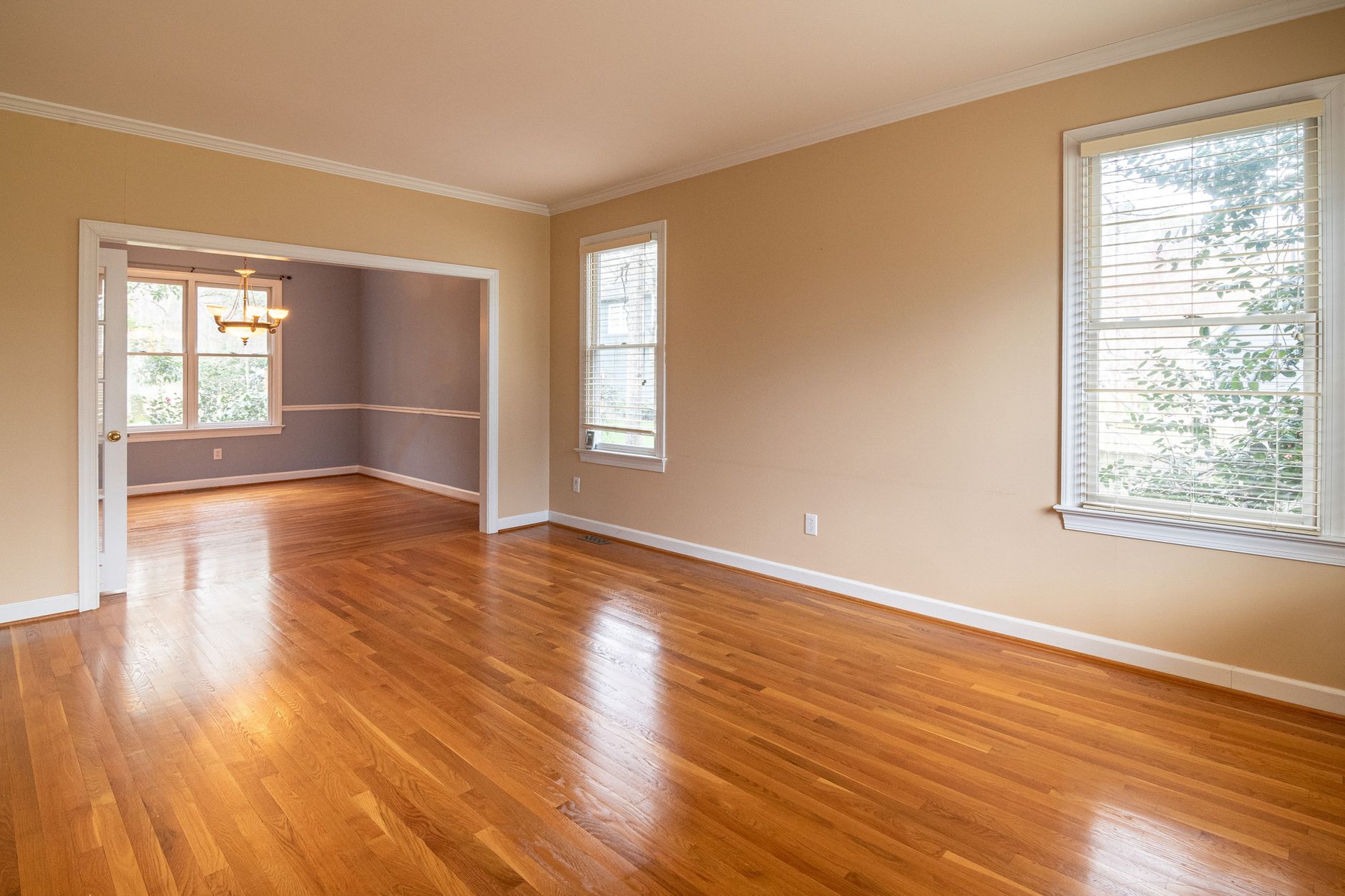
Hardwood floors gap in Colorado because wood loses moisture to the state’s dry air and shrinks across its width. The fix is not the flooring — it is the air. Keeping indoor relative humidity in roughly the 30-50% range, and never letting it sit under 20% for long stretches, is what keeps boards tight enough that gaps stay small or close up entirely.
What actually causes hardwood floors to gap in Colorado?
Wood is hygroscopic — it takes on and gives up moisture depending on the humidity around it. When indoor air dries out, boards lose water, shrink slightly across their width, and the joints between them open. In most of the country this is a minor seasonal wobble. In Colorado it is a bigger swing, because the state’s air holds less moisture to begin with.
Solid wood flooring is manufactured and installed at a moisture content matched to a normal indoor range. When the surrounding air falls well below that range for weeks at a time — a typical Front Range winter with the furnace running — the wood keeps shedding moisture until it reaches equilibrium with the room. That shrinkage shows up as a hairline gap between boards, sometimes visible across an entire room in a consistent pattern.
What humidity range actually stops the gapping?
Most solid hardwood performs best when indoor relative humidity stays between about 30% and 50% year-round, without long stretches under 20%. Wood installed and acclimated within that band moves very little. Below 20% for weeks at a time, most solid strip and plank floors will show visible seasonal gaps no matter how well they were installed.
This is a range, not a single number, because wood species, board width, and the home’s construction all shift the exact tolerance. Wider plank floors gap more visibly than narrow strip oak for the same humidity swing, simply because the same percentage of shrinkage is spread across more inches of board.
Does Colorado’s altitude make this worse than other dry states?
Yes, and it is the real spine of this problem, more than anything about Colorado’s houses themselves. At altitude, wood framing and flooring typically equilibrate to a 6-9% moisture content, compared with 10-13% at lower elevations where most flooring manufacturing standards were originally written. That gap between manufacturing assumptions and installed reality is why acclimation before installation matters so much here — flooring needs roughly 7-14 days on-site, in the actual room, before it goes down, so it can shrink before it is nailed or glued rather than after.
Combine that baseline dryness with a furnace-heated winter, when indoor relative humidity in an unhumidified Colorado home routinely drops under 20%, and boards that acclimated properly in October can still open up gaps by February. This is a climate problem first. It shows up in a 1962 Aurora ranch and a 2019 Fort Collins townhome alike.
Is gapping different in an old house than a new one?
The mechanism is the same, but old subfloors change how it looks. Colorado’s housing stock is genuinely young for the U.S. — the statewide median home was built in 1965, and only about 25% predate 1940 (U.S. Census Bureau, American Community Survey 2020-2024 5-year estimates) — but that quarter of older homes behaves differently underfoot.
- Denver: median year built 1975, 16.9% pre-1940 housing.
- Pueblo: median year built 1965, 21.2% pre-1940 housing.
- Boulder: median year built 1977, 7.5% pre-1940 housing.
- Fort Collins, Aurora, Thornton: median years 1985-1997, almost all under 5% pre-1940.
In the older quarter of the stock, diagonal 1×6 plank subfloors are common instead of plywood, and narrow-strip oak often sits directly on that plank with no underlayment. That combination moves as a system — the subfloor itself expands and contracts with the seasons, and gaps can appear at the subfloor joints as well as between finish boards. A newer Aurora or Thornton home on plywood subfloor tends to show cleaner, more uniform gapping confined to the finish floor. Full city-by-city housing stock detail is on the city flooring guides.
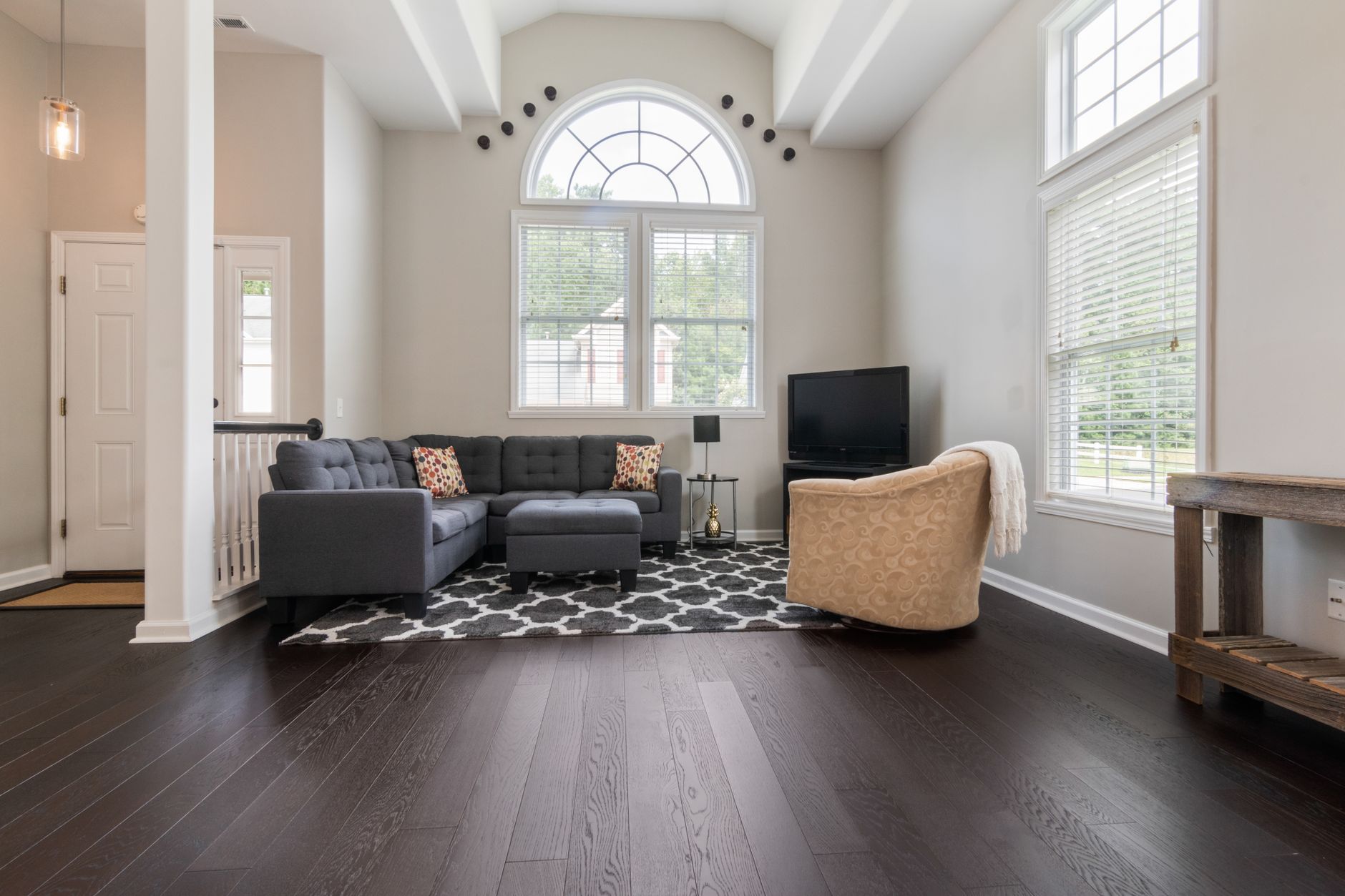
Can existing gaps actually be fixed, or just managed?
Seasonal gaps that close back up in summer are not a defect — they are wood doing what wood does, and they do not need repair. Gaps that stay open year-round are a different situation, usually pointing to a home that runs dry all twelve months, not just in January.
Where gaps are wide and permanent, the realistic options are:
- Correct the humidity first, then reassess in a full heating season — many “permanent” gaps shrink noticeably once indoor RH is stabilized.
- Refinishing with a filler pass for cosmetic gaps that are not going to close on their own; this falls in the $3-$8 per square foot refinishing range this site publishes for planning purposes, with the final number depending on the floor’s condition and the reader’s own project.
- Board replacement or a full replacement in severe cases, which falls under the $6-$21 per square foot installed hardwood range published for the state — again a planning range, not a quote, and the flooring cost estimator is the tool for narrowing it to a specific room and material.
Sanding a gapped floor flush and refilling it without addressing the humidity is a common mistake — the gaps often reopen the following winter because the underlying moisture swing was never solved.
What does a working humidity setup actually look like?
Most Colorado homes with gapping problems have no active humidity control at all — just a furnace pulling already-dry outside air through the house all winter. A few things move the needle:
- A whole-house humidifier tied to the furnace, sized to the home’s square footage, run through the heating season.
- A hygrometer in the room with the floor, checked periodically rather than assumed.
- Portable humidifiers in the specific room if a whole-house unit is not practical, aimed at keeping that room’s RH out of the sub-20% range.
- Avoiding the opposite mistake — over-humidifying a Colorado home in summer, which can cause cupping instead of gapping.
The EPA publishes general guidance on healthy indoor humidity ranges for homes, which lines up closely with what stabilizes wood flooring — a useful independent reference beyond flooring-specific advice.
When is a floor gap actually a sign of something else?
Not every gap is a humidity story. A gap that is much wider at one end of a board than the other, or that runs along one wall but not the rest of the room, often points to structural movement — a joist that has dried and shrunk unevenly, or a foundation settling — rather than seasonal wood movement. That distinction matters before spending money on refinishing or replacement, and it is worth having a qualified professional look at the specific pattern rather than assuming it is climate.
Gaps that appear only near exterior walls or below windows can also signal a moisture source other than dry indoor air — a leak, condensation, or a crawlspace issue — and those need their own diagnosis rather than a humidifier.
Where does hardwood not make sense in a dry Colorado home?
Solid hardwood is a poor fit for below-grade rooms, bathrooms, and any space where the homeowner is not going to manage indoor humidity through the winter — the gapping and the cupping both trace back to the same unmanaged swing. In those rooms, engineered wood, luxury vinyl plank, or tile are more dimensionally stable choices; the tradeoffs of each material are laid out on the flooring materials guide.
For a whole-home comparison of what solid hardwood, engineered wood, and other materials cost installed across Colorado’s cities, the flooring cost guide breaks out the ranges by material, and the cost estimator turns those ranges into a planning number for a specific room.
Frequently asked questions
Is a small gap between hardwood boards in winter normal in Colorado?
Yes. Seasonal gaps that open in dry winter months and close as humidity rises in summer are typical wood movement, not a defect, and are common across Colorado’s dry climate regardless of the home’s age.
Should new hardwood acclimate before installation?
Yes — most manufacturers and installers recommend 7-14 days of on-site acclimation in the actual room before installation, longer than in humid states, because Colorado’s altitude and dry air bring wood to a lower moisture content than flooring is typically manufactured at.
Does a humidifier really stop gapping, or just reduce it?
A properly sized humidifier that keeps indoor relative humidity above roughly 20-30% through the heating season significantly reduces gapping and often closes existing seasonal gaps. It will not fully eliminate all wood movement, which is a normal property of solid wood.
Does engineered hardwood gap less than solid hardwood in Colorado?
Generally yes. Engineered wood’s cross-layered construction resists humidity-driven movement better than solid wood, which is why it is often recommended for Colorado’s dry, high-altitude conditions even though solid hardwood remains an option with proper humidity management.
CO Floors is an independent Colorado flooring resource. We do not sell or install flooring, we do not quote jobs, and nobody from this site will call you. Cost figures here are published planning ranges for Colorado, not quotes — what you actually pay depends on your rooms, your subfloor and the material you choose, and the final price depends on your project. Photography is licensed stock used to illustrate materials and rooms; it is not work by anyone connected to this site. Building code and permit requirements are enforced locally in Colorado, so confirm anything regulatory with your own municipality before you rely on it.
Any prices mentioned are indicative only. Tool prices move constantly and vary by market, by retailer, and by whether a kit includes batteries or a charger — check the current price yourself before deciding.
Featured image: Photo by Curtis Adams via Pexels.