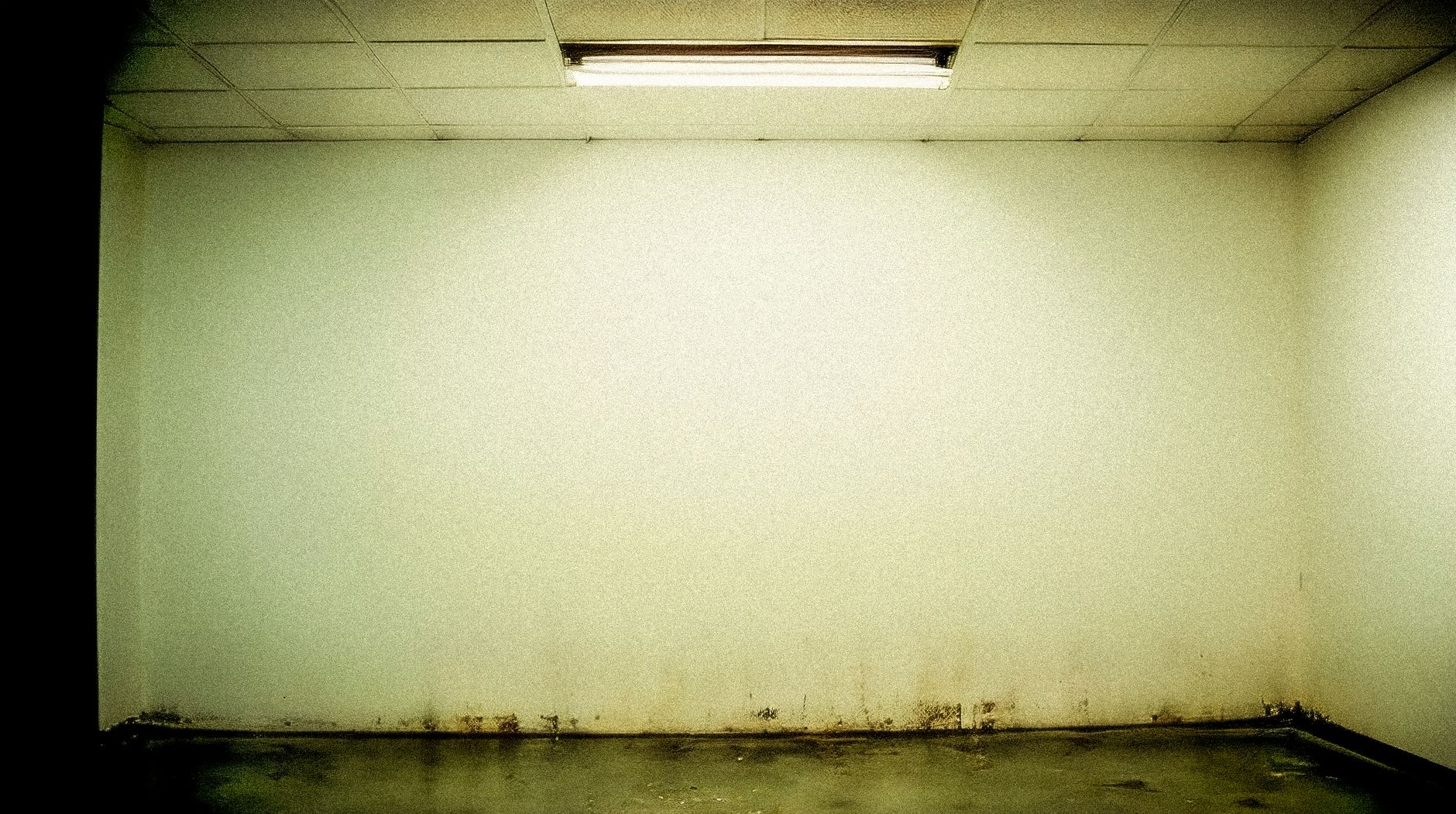
A basement slab in Colorado is concrete sitting in or on the ground, which means it stays cooler than the rest of the house and can carry moisture up through it even when the floor looks and feels dry. That rules out solid hardwood outright and puts pressure on anything else with a wood or paper component. Luxury vinyl plank, tile, and sealed concrete are the materials that consistently work; carpet and laminate work only with the right prep.
What makes a basement slab different from a main-floor subfloor?
A main-floor subfloor sits above grade, usually over a crawlspace or conditioned space, and it dries out in both directions. A basement slab sits against soil on at least one side, sometimes all four. Moisture moves through concrete by capillary action even without a visible leak, and in Colorado’s dry climate that moisture has nowhere obvious to go once it’s trapped under a floor covering — the home’s low winter humidity is all above the slab, not below it.
Older Colorado basements compound this. A slab poured before the 1960s or 70s often has no polyethylene vapor barrier underneath it at all, and even newer pours vary in how well the barrier was lapped and sealed. Since the state’s housing stock skews old by national standards — a quarter of Colorado homes predate 1940 — a lot of basements in this market were never built with a modern vapor retarder in mind.
Which flooring materials actually work below grade?
Four materials show up consistently in basement installs, and each comes with a condition attached.
- Luxury vinyl plank: the default choice for basement slabs. It’s dimensionally stable, unaffected by moderate moisture, and installs as a floating floor directly over concrete with a thin foam underlayment. It does not care about the slab’s temperature the way wood does.
- Tile: performs well on a slab that is flat and structurally sound, since concrete doesn’t flex the way a wood-framed floor does. It’s also the most tolerant of residual slab moisture of anything in this list.
- Carpet: workable, but only over a slab that has been tested and, where needed, treated with a moisture mitigation product first. Carpet pad holds moisture against the slab rather than letting it evaporate, which is exactly the wrong behavior on a damp basement floor.
- Laminate: most laminate cores are wood-fiber based and swell if they take on moisture, so it needs a slab moisture test and a vapor barrier underlayment rated for below-grade use. It’s a narrower path than vinyl, not a closed one.
Solid hardwood does not belong on a basement slab under any circumstance common in Colorado — the wood will move with slab moisture regardless of acclimation, and refinishing it later doesn’t fix a moisture problem baked into the subfloor. Engineered hardwood is sometimes marketed as basement-safe because of its plywood core, but it still carries more risk below grade than LVP at a comparable price point; the engineered-vs-solid comparison for Colorado altitude is worth reading before deciding either way.
What about older Colorado basements built before a vapor barrier was standard?
An unfinished basement under a pre-1970s house is the one case where it pays to slow down before buying material. Without a vapor barrier under the original pour, moisture vapor transmission can be higher than a newer slab, and the only way to know is a calcium chloride or in-situ relative humidity test performed before flooring goes down — not a guess based on how the concrete feels to the hand.
This is also where sealed, polished, or stained concrete earns a mention as its own category rather than a compromise. Leaving the slab exposed and treating it as the finish floor sidesteps the moisture question almost entirely, at the cost of a colder, harder surface underfoot. It’s a legitimate answer for a basement office or storage area, less so for a space meant to feel like living space.
Does radon or moisture testing change the plan?
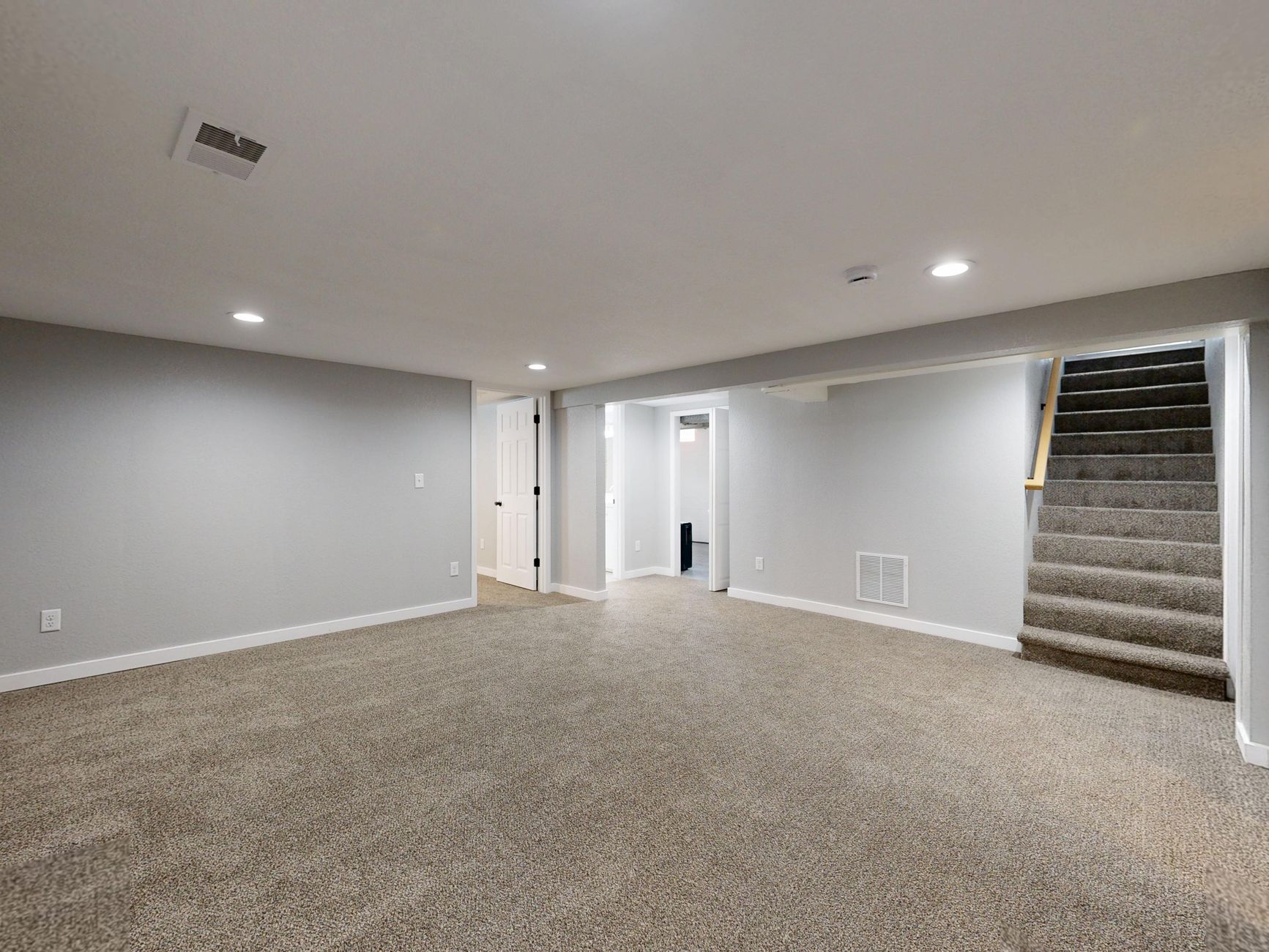
It can change the sequence, not the materials. Colorado has areas of elevated radon potential, and a below-grade slab is the entry point. Sealing a slab for moisture and sealing it against radon intersect — if a basement hasn’t been tested for radon, that’s worth doing before any flooring goes down, since mitigation work (sub-slab depressurization, sealing slab penetrations) is easier on bare concrete than after plank or tile is installed. The EPA publishes guidance on testing and mitigation, and that’s the right first stop rather than any assumption made here about a specific basement.
Moisture testing follows the same logic. A slab that reads high on a moisture test isn’t disqualified from flooring — it just needs a vapor-retarding underlayment or a liquid-applied membrane rated for the reading, chosen to match whichever material is going down. Skipping the test and hoping the floor holds is the version of this job that ends in cupped laminate or peeling glue-down vinyl two winters later.
What does permitting look like for a basement floor?
Flooring itself typically isn’t the permit trigger — it’s what tends to accompany a basement project that is: egress windows, electrical for new outlets, drywall and insulation if the space is being finished for the first time. Colorado permits are enforced at the municipal level under the state’s Uniform Construction Code, so whether a given scope needs a permit is a question for the city or county building department, not a statewide rule. The hiring and permits archive covers how that process tends to run; the Colorado Office of Attorney General maintains the state’s contractor registration lookup if verifying a contractor’s standing is part of the plan.
What does basement flooring cost in Colorado?
Pricing follows the material, with one basement-specific variable layered on top: slab prep. A flat, dry, crack-free slab costs nothing extra beyond the flooring itself. A slab that needs moisture mitigation, self-leveling compound, or crack repair adds a line item before installation even starts.
Using the ranges this site tracks for installed cost statewide:
- Luxury vinyl plank: $2–$12 per square foot installed
- Tile: $9–$14 per square foot installed
- Carpet: $2–$8 per square foot installed
- Laminate: $3–$10 per square foot installed
- Removing an existing basement floor covering: $1–$4 per square foot
These are planning ranges, not quotes — slab condition, square footage, moisture treatment, and the finish level chosen within each material all move the final number for a specific basement. The flooring cost estimator builds those variables into a project-specific range, and the installed flooring cost hub breaks the same ranges down by material and by Colorado city. For how these numbers run in a specific market, the city-by-city flooring guide is the place to check next, and the materials hub covers where each option performs and where it doesn’t, beyond the basement case made here.
CO Floors is an independent Colorado flooring resource. We do not sell or install flooring, we do not quote jobs, and nobody from this site will call you. Cost figures here are published planning ranges for Colorado, not quotes — what you actually pay depends on your rooms, your subfloor and the material you choose, and the final price depends on your project. Photography is licensed stock used to illustrate materials and rooms; it is not work by anyone connected to this site. Building code and permit requirements are enforced locally in Colorado, so confirm anything regulatory with your own municipality before you rely on it.
Any prices mentioned are indicative only. Tool prices move constantly and vary by market, by retailer, and by whether a kit includes batteries or a charger — check the current price yourself before deciding.
Featured image: Photo by Yusuf Çelik via Pexels.