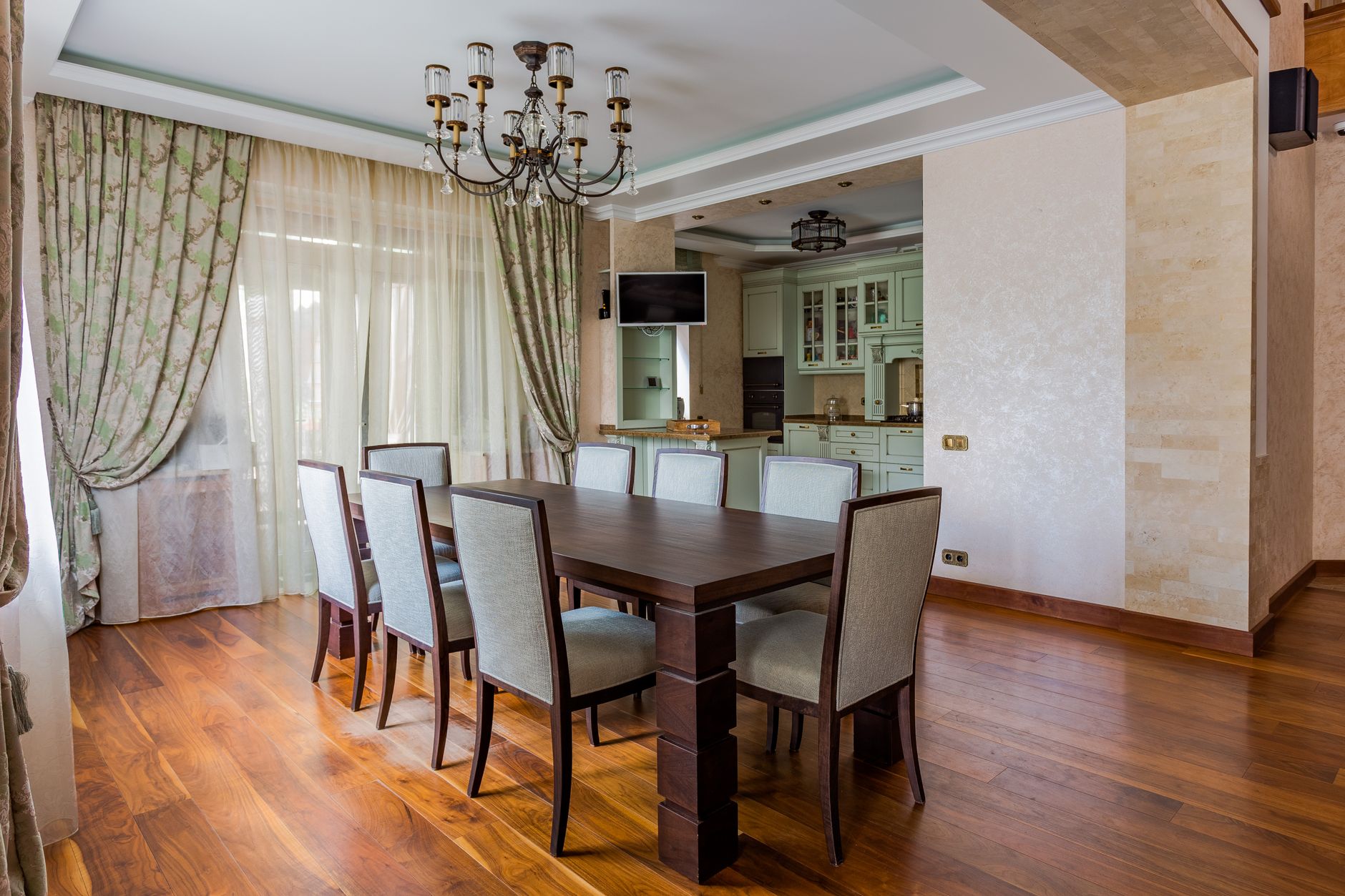
Engineered hardwood holds up better against Colorado’s dry indoor air and wide humidity swings because its cross-layered core resists the expansion and contraction that solid wood goes through. Solid hardwood still works, but it needs a slab-free subfloor, stricter acclimation, and more tolerance for seasonal gaps.
What’s actually different between the two products?
Solid hardwood is one piece of wood, milled to a tongue-and-groove profile, usually 3/4 inch thick. Engineered hardwood has a hardwood wear layer — often 2 to 6 millimeters — bonded over several layers of plywood or high-density fiberboard, with the grain of each layer running a different direction.
That cross-layering is the whole point at altitude. Wood moves with moisture, and it moves mostly across the grain, not along it. Stacking layers at right angles cancels most of that movement out. A solid plank has nothing canceling it — it expands and contracts the way the tree grew.
Why does altitude change the calculus?
Denver sits around 5,280 feet, and most of the Front Range isn’t far behind. Thinner air at elevation holds less moisture, and Colorado’s climate is already arid before altitude is even factored in. Indoor relative humidity routinely drops under 20% during heating season, compared with the 30-50% a lot of flooring manufacturers assume as a baseline.
Wood flooring is manufactured and shipped to reach roughly 6-9% moisture content before installation. If a home’s indoor air is drier than the product’s shipping environment, the wood keeps losing moisture after it’s nailed or glued down — and it shrinks as it does. That’s the mechanism behind the gapping that shows up in Colorado living rooms every January, not a defective product.
The fix isn’t a different wood species. It’s acclimation time and moisture testing before the first board goes down. The site covers both of those steps in more detail at what moisture content hardwood should reach before installation and why altitude needs 7-14 days of acclimation, not the 3-5 printed on some product boxes.
How does dry air affect each type differently?
Solid hardwood expands and contracts the most, because it’s reacting as a single piece across its full width. A 5-inch solid plank moves more, in absolute terms, than a 5-inch engineered plank with the same surface species.
Engineered flooring’s layered core restrains that movement. The wear layer is real wood and still responds to humidity, but the plywood or HDF underneath holds it flatter and tighter. That’s why engineered is the more forgiving choice in a basement, over radiant heat, or in a home where indoor humidity is hard to keep stable year-round.
Neither product is gap-proof. Solid hardwood installed and acclimated correctly in a well-humidified home can look stable for years. Engineered flooring installed without acclimation, over a damp slab, or in a room with a humidifier that gets turned off every spring can still gap, cup, or crown. The product doesn’t substitute for the prep. More on what that gapping looks like and how it’s corrected is at why hardwood floors gap in Colorado and the humidity fix.
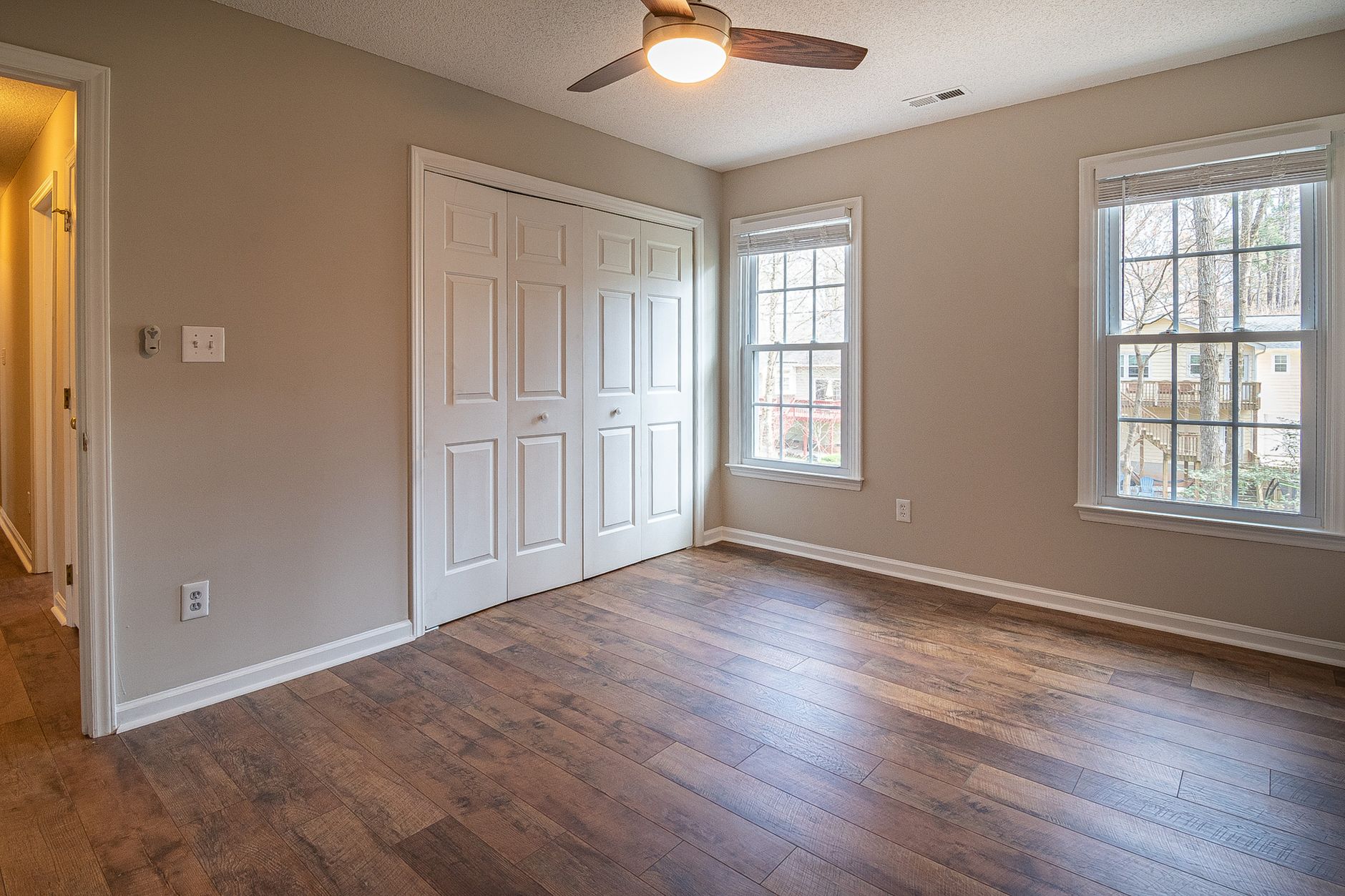
Where does engineered hardwood make more sense?
Engineered is the better fit in a specific set of Colorado conditions:
- Basements and any room built over a concrete slab, since solid hardwood generally should not be installed directly on or below grade.
- Homes with radiant floor heating, where the constant, close heat source dries and stresses wood more aggressively.
- Rooms where wide-plank or wire-brushed, visually dramatic surfaces are wanted — engineered construction handles wider widths with less risk of cupping than solid wood at the same width.
- Rental properties or homes changing hands often, where a thinner wear layer that still offers one or two refinishing cycles is an acceptable trade for lower material cost.
Where does solid hardwood still make more sense?
Solid wood is still the right call in a few situations:
- Main-level rooms over a wood joist subfloor, with no slab contact and reasonable humidity control.
- Historic restorations, where matching existing narrow-strip oak or fir with another solid product keeps the floor visually and structurally consistent.
- Any owner planning multiple refinishing cycles over decades — solid hardwood’s full thickness can be sanded down several more times than most engineered wear layers allow.
Neither product belongs in a bathroom or a mudroom with standing water risk, and this is a case where the site’s general rule on materials applies directly — every flooring type has rooms it doesn’t belong in, covered more broadly at the eight flooring materials and where each one fails.
What does each cost installed in Colorado?
Hardwood installed — solid or engineered — runs $6 to $21 per square foot in Colorado, a wide range because it’s driven by wood species, plank width, finish type, subfloor condition, and labor in the reader’s specific market. Engineered product often lands toward the lower-middle of that range at the material level, but labor, underlayment, and transition details can pull either product in either direction.
These figures are planning ranges, not a quote — the only way to get a number tied to an actual address, square footage, and subfloor is through the Colorado flooring cost estimator, which walks through those variables directly. The full breakdown by material and by city lives at the installed flooring cost hub.
If an old floor is coming out first, removal runs $1 to $4 per square foot on top of the installation figure, and that number also depends on what’s underneath — carpet pad comes up easily, old adhesive-set parquet does not.
What does Colorado’s older housing stock change?
Colorado has the fourth-oldest housing stock profile of any state by some measures, but that fact gets misapplied if it isn’t read carefully. The median Colorado home was built in 1965, and only about 25% of homes predate 1940, according to the U.S. Census Bureau’s American Community Survey. That’s old by Western-state standards, not old in the way a Northeastern or Midwestern city’s housing stock is old.
Where it matters is subfloor type. Homes built before plywood became standard — roughly pre-1950s in much of Colorado — often have diagonal 1×6 board subfloors instead of sheet plywood. That changes the nailing pattern and screw-down schedule for solid hardwood, and it’s one of the first things worth checking before assuming a straightforward install. Pueblo, with 21.2% of its housing stock predating 1940, and Denver, at 16.9%, carry more of this condition than younger Front Range suburbs like Thornton (0.3% pre-1940, median year built 1997) or Aurora (1.0% pre-1940, median 1985). The full city-by-city breakdown of median build year and pre-1940 share is at the Colorado flooring by city hub.
Under old carpet in many of these homes, narrow-strip oak from the original construction is still sound and often worth refinishing rather than replacing — that’s a separate conversation covered under care and repair, and it changes the solid-versus-engineered question entirely if the existing floor is salvageable.
Joist spacing is the other old-house variable. Older framing sometimes deflects more under load than current building code allows for newer construction, which matters more for rigid tile than for wood — but it’s worth a look before committing to a wide-plank solid product that telegraphs subfloor movement more visibly than a narrower board would. Subfloor assessment and the general sequence of prep work are covered at installation and prep.
Does either product need a permit or a licensed installer?
Flooring work in Colorado carries a licensing exemption in many municipalities, but permit and registration rules are set locally, not by the state, under the Uniform Construction Code. Whether a specific job needs a permit is a question for the reader’s own municipality, not a statewide answer. Anyone hiring out the work can also check a contractor’s registration status through the Colorado Office of the Attorney General, and the site’s own rundown of how licensing applies to flooring specifically is at does a flooring contractor need a license in Colorado. General hiring questions are gathered at hiring and permits.
Frequently asked questions
Can solid hardwood go over a concrete slab in Colorado?
Generally, no — solid hardwood is typically not recommended directly on or below grade over a slab due to moisture exposure from the concrete. Engineered hardwood, built to resist that movement, is the usual substitute in basements and slab-on-grade main levels.
Does engineered hardwood still need acclimation time at altitude?
Yes. Engineered flooring moves less than solid wood, but its wear layer is still real wood reacting to indoor humidity. Skipping acclimation is a common cause of gapping and cupping even in engineered product, which is why the 7-14 day window matters regardless of which type is chosen.
Which one handles radiant floor heat better?
Engineered hardwood is generally the more stable option over radiant heat, since its layered core resists the stress of a constant, close heat source better than a solid plank does. Manufacturer specifications for a given radiant system should still guide the final decision.
Is engineered hardwood cheaper than solid hardwood installed?
Both fall within the same $6 to $21 per square foot installed range in Colorado, since labor, species, and finish affect the total as much as the construction type does. The estimator is the more reliable way to compare the two for a specific room and subfloor.
CO Floors is an independent Colorado flooring resource. We do not sell or install flooring, we do not quote jobs, and nobody from this site will call you. Cost figures here are published planning ranges for Colorado, not quotes — what you actually pay depends on your rooms, your subfloor and the material you choose, and the final price depends on your project. Photography is licensed stock used to illustrate materials and rooms; it is not work by anyone connected to this site. Building code and permit requirements are enforced locally in Colorado, so confirm anything regulatory with your own municipality before you rely on it.
Any prices mentioned are indicative only. Tool prices move constantly and vary by market, by retailer, and by whether a kit includes batteries or a charger — check the current price yourself before deciding.
Featured image: Photo by Алан Албегов via Pexels.